How to Transition Your Summer Wardrobe Into Early Fall 2026: A Step-by-Step Style Guide
Transitioning a summer wardrobe into early fall means layering and reweighting what you own rather than replacing it. Lead with fabric weight instead of the calendar, shift the palette toward warm neutrals one shade at a time, change your footwear before your fabrics, and add one transitional layer like a trench, suede jacket, or fine knit.
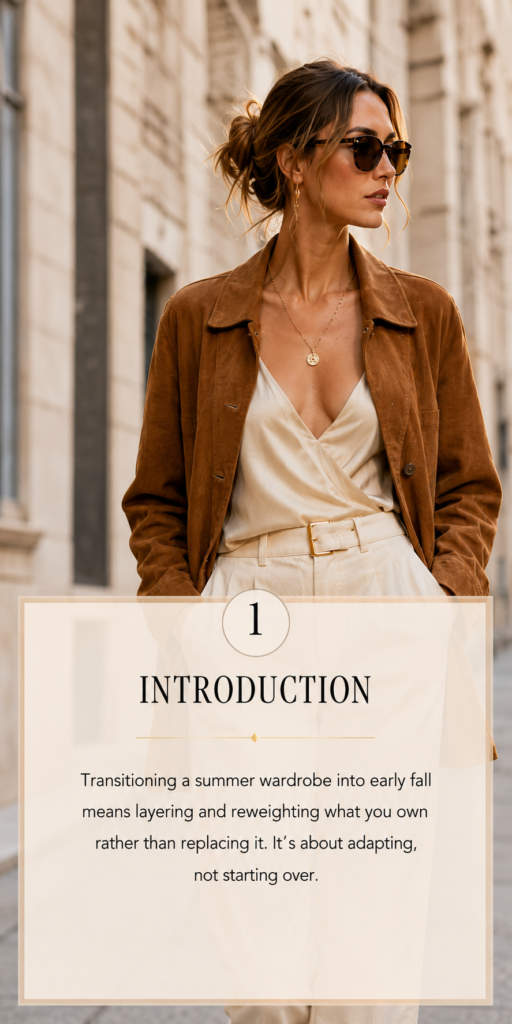
The hardest part of early fall is not finding new clothes but knowing what to do with the ones you already have. Warm afternoons and cool evenings make a full seasonal switch premature, so the most polished approach is a method rather than a shopping trip.
This guide breaks that method into clear steps, drawing on the same principles behind a compact transitional capsule: keep breathable summer pieces in rotation, introduce autumn texture gradually, and let layering do the work a heavier wardrobe would do too soon. The goal is a wardrobe that adapts to the day instead of fighting it.

What does it mean to transition a wardrobe for fall?
Transitioning a wardrobe for fall means adapting your existing summer clothing to cooler, variable weather through layering, footwear, and palette changes rather than replacing it. The principle is reweighting: keeping versatile summer foundations like slip dresses, cotton shirts, and white denim, then adding autumn texture and one removable layer so each outfit works across a wide temperature range.
Done well, the transition feels like a natural evolution of your wardrobe, not a sudden reset, and it requires only a few considered additions.
Summer-to-Fall Transition Tool
Pick a summer piece to see if it stays in rotation and how to restyle it for early fall.
Select a piece above to see your transition move.
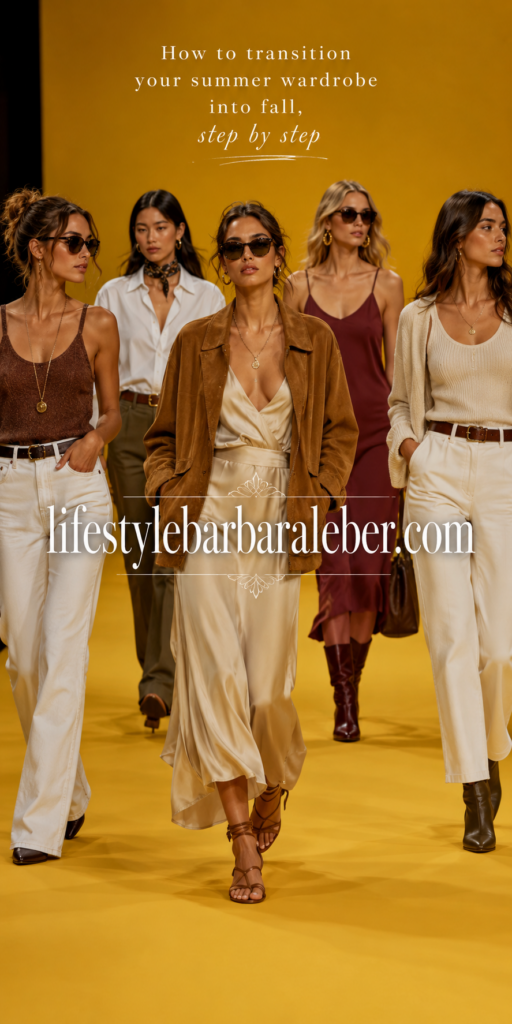
How to transition your summer wardrobe into fall, step by step
The most reliable way to move a wardrobe into early fall is to follow a repeatable sequence rather than change everything at once. Each step below builds on the last, shifting an outfit from summer to autumn in a way that stays comfortable across a fifteen-degree temperature swing.
Work through them in order, and almost any warm-weather outfit can carry into the new season with a single layer or swap.
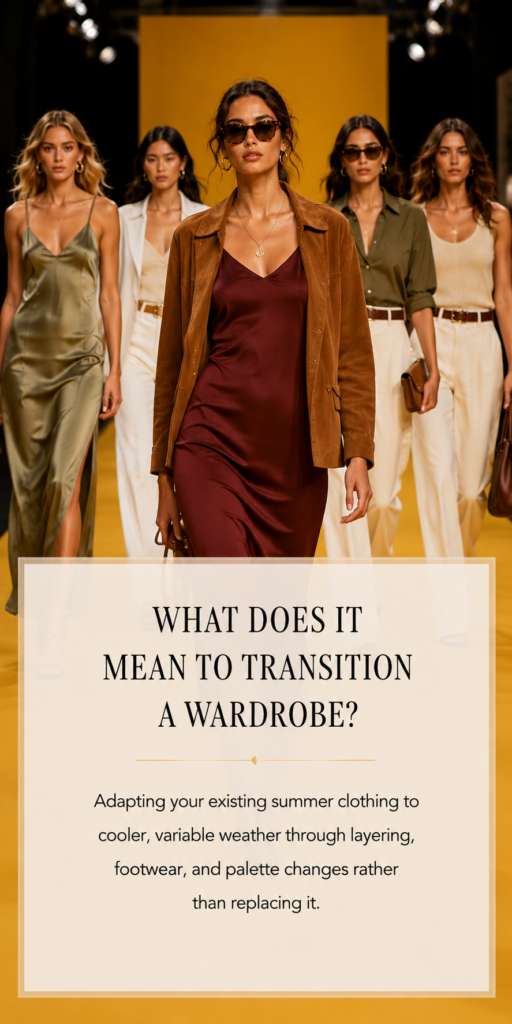
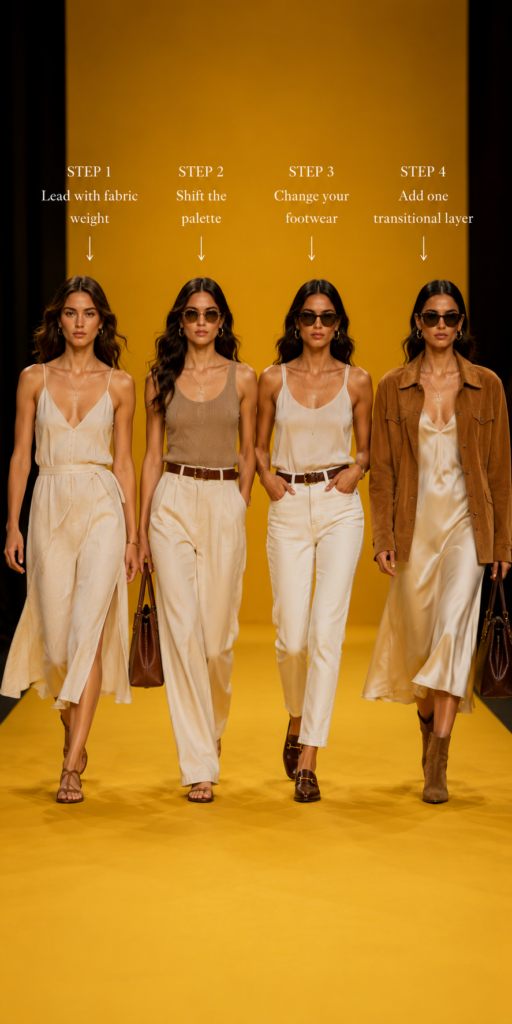
Step 1: Lead with fabric weight, not the calendar
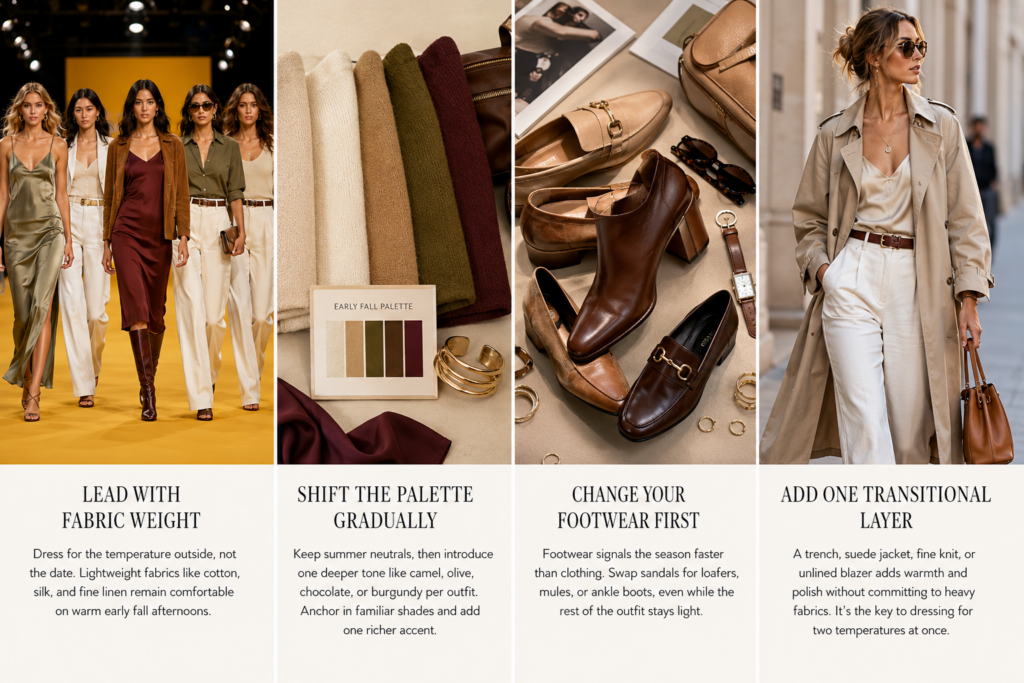
Dress for the temperature outside, not the date, by leading with fabric weight. Lightweight fabrics like cotton, silk, and fine linen remain comfortable on warm early fall afternoons, so there is no need to pack them away. Instead, keep them in rotation and add structure through layering.
Reserving heavier wool and thick knits until temperatures consistently drop prevents the common mistake of overdressing while afternoons still climb into warm territory.
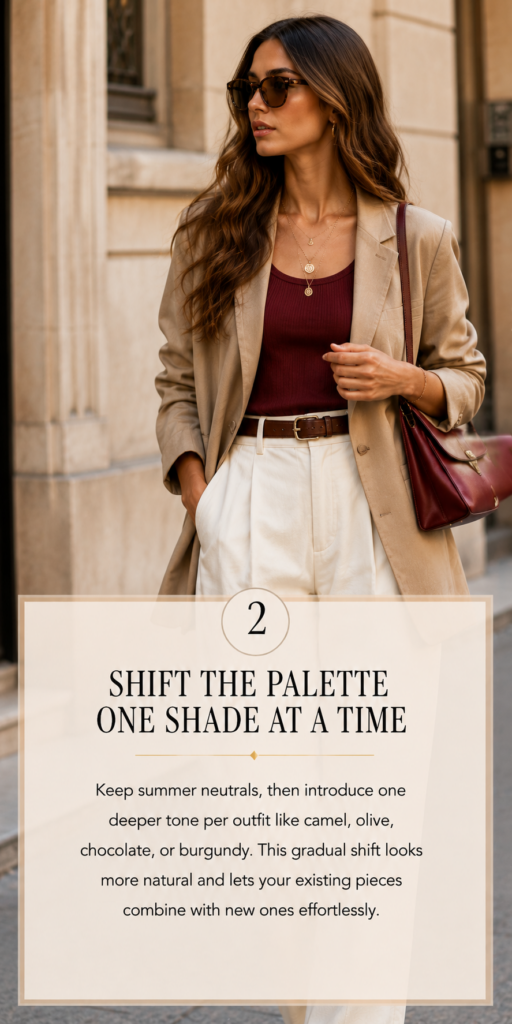
Step 2: Shift the palette one shade at a time
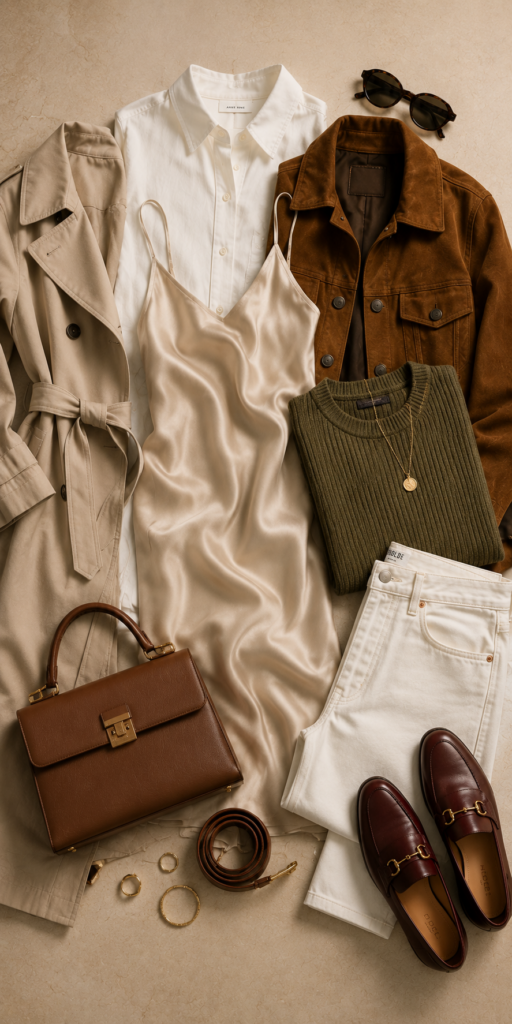
Move the palette toward autumn gradually rather than all at once. Keep summer neutrals like white, navy, and tan, then introduce one deeper tone such as camel, olive, chocolate, or burgundy per outfit.
This gradual shift looks far more natural than a fully saturated autumn palette and lets existing pieces combine with new ones. Anchoring an outfit in a familiar neutral and adding a single richer accent is the simplest way to signal the season.
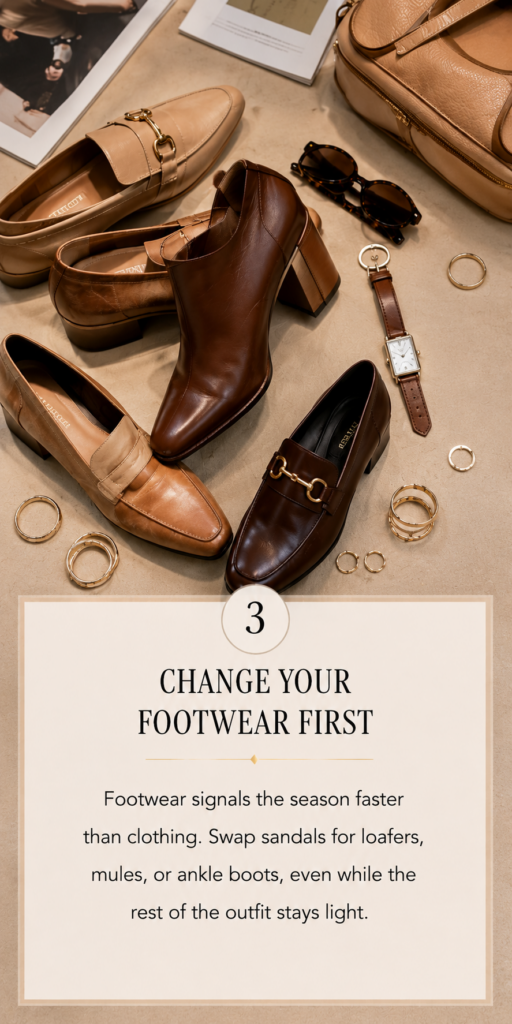
Step 3: Change your footwear before your fabrics
Footwear signals the season faster than clothing, so change shoes first. As evenings cool, swap summer sandals for leather loafers, mules, or ankle boots, even while the rest of the outfit stays light.
Closed-toe shoes in deeper tones immediately read as autumn and pair naturally with the denim, skirts, and dresses already in rotation. Transitioning footwear before fabrics is the fastest, lowest-cost way to make a summer outfit feel seasonally appropriate.
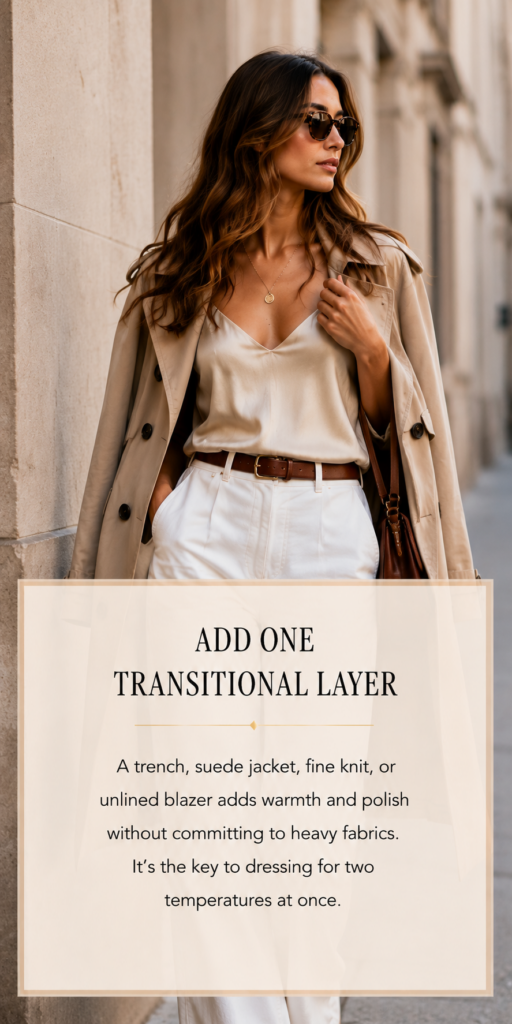
Step 4: Add one transitional layer
Introduce a single removable third layer to bridge warm days and cool evenings. A trench coat, suede jacket, fine knit, or unlined blazer adds warmth and visual depth without committing to heavy autumn fabrics.
This third piece is what makes an outfit feel finished and seasonal, and because it can be carried once the afternoon warms, it solves the core early fall problem of dressing for two temperatures at once.
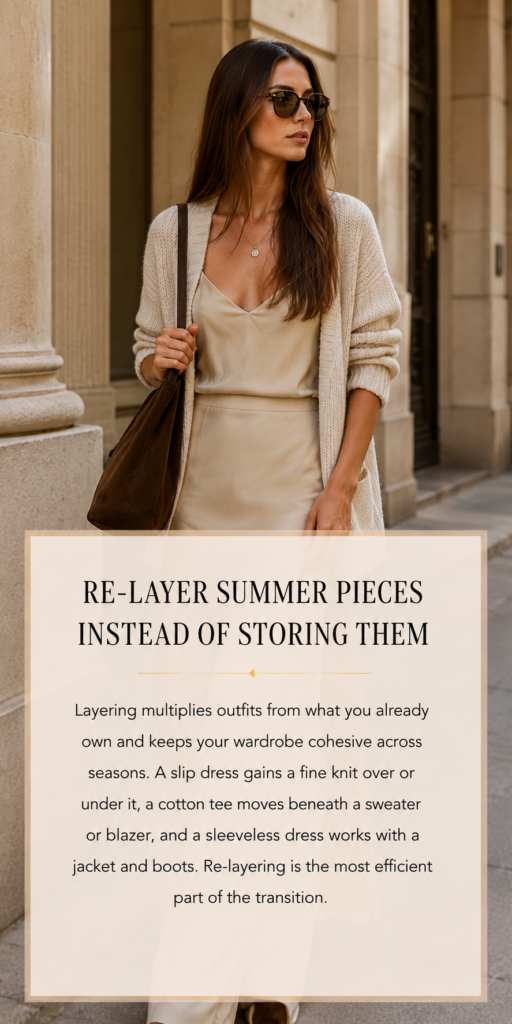
Step 5: Re-layer summer pieces instead of storing them
Extend summer pieces by layering rather than retiring them. A slip dress gains a fine knit over or under it, a cotton tee moves beneath a sweater or blazer, and a sleeveless dress works with a jacket and boots.
Re-layering is the most efficient part of the transition, since it multiplies outfits from clothing you already own and keeps the wardrobe coherent across seasons without new purchases.
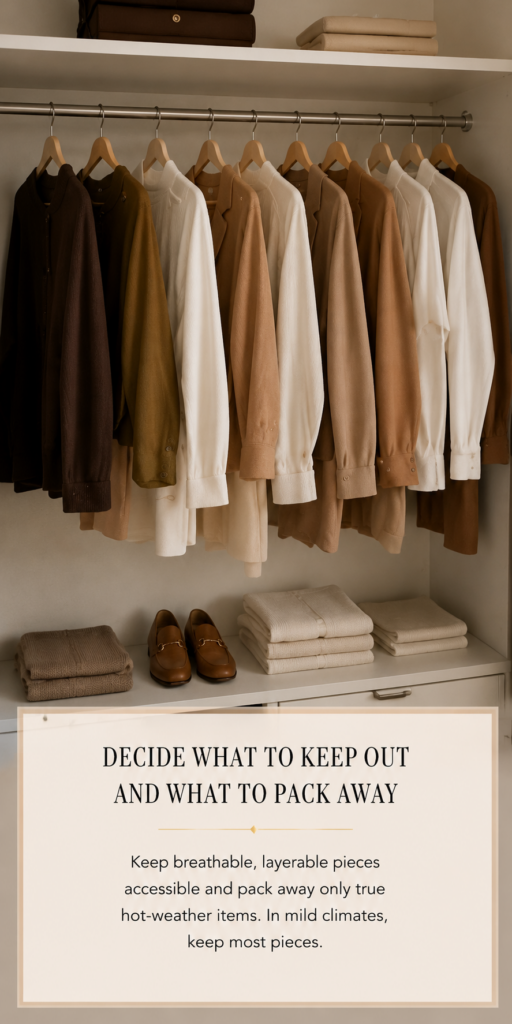
Step 6: Decide what to keep out and what to pack away
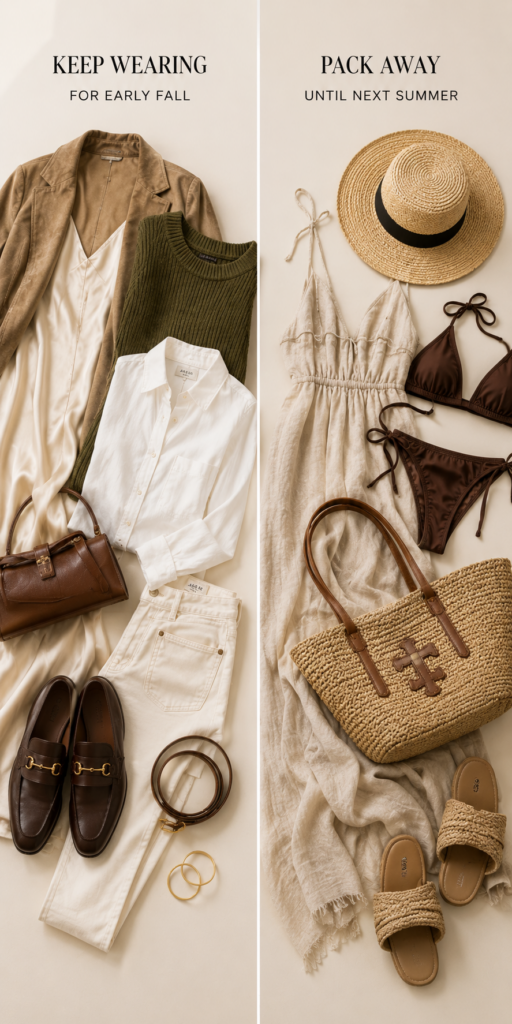
Separate clothing by fabric weight and versatility rather than by season. Keep breathable, layerable pieces accessible, including cotton shirts, slip dresses, white denim, and fine knits, and pack away only true hot-weather items like swimwear, heavy linen sundresses, and beach pieces.
In milder climates, very little needs storing at all. This edit keeps the most useful transitional pieces within reach during the weeks when the weather changes daily.
Which summer pieces can you keep wearing in early fall?
Many summer staples carry directly into fall with a single adjustment, which is why a wardrobe rarely needs replacing. The quick reference below shows how to transition the most common warm-weather pieces, pairing each with the layer or swap that makes it season-appropriate. Use it as a starting point rather than a rule, adapting to your own climate and the pieces already in your closet.
| Summer piece | How to transition it |
|---|---|
| Slip dress | Layer a fine knit over or under it; add ankle boots |
| Linen dress | Add a suede jacket and closed-toe shoes for warm afternoons |
| White jeans | Pair with camel and chocolate knits; keep wearing |
| Cotton T-shirt | Move it under a sweater or blazer as a base layer |
| Leather sandals | Swap for loafers or ankle boots as evenings cool |
| Tailored shorts | Add tights and ankle boots, or pack away in cold climates |
| Breton top | Treat as a neutral under a trench or with denim |
| Silk camisole | Layer under a blazer or fine knit for evening |
The fabric weight rule
Fabric weight matters more than fibre name when transitioning a wardrobe, because weight determines comfort across changing temperatures. Lightweight fabrics such as silk, cotton, and fine linen stay breathable on warm afternoons, medium weights like denim, crepe, and twill suit mild days, and heavier wool, tweed, and thick knits belong to colder weeks ahead.
In my experience, the most elegant early fall outfits combine a lightweight base with one structured layer, balancing softness and form. Mixing textures, such as cotton with suede or denim with cashmere, often creates more visual richness than adding another colour.
Not Sure What to Do With a Summer Piece? Find Out Instantly
Every wardrobe holds a few pieces that feel caught between seasons, the ones you are unsure about packing away. The tool below removes the guesswork: select a summer piece and it tells you straight away if it earns a place in your early fall rotation and exactly how to restyle it, so you can transition your closet piece by piece with confidence rather than storing things too soon.
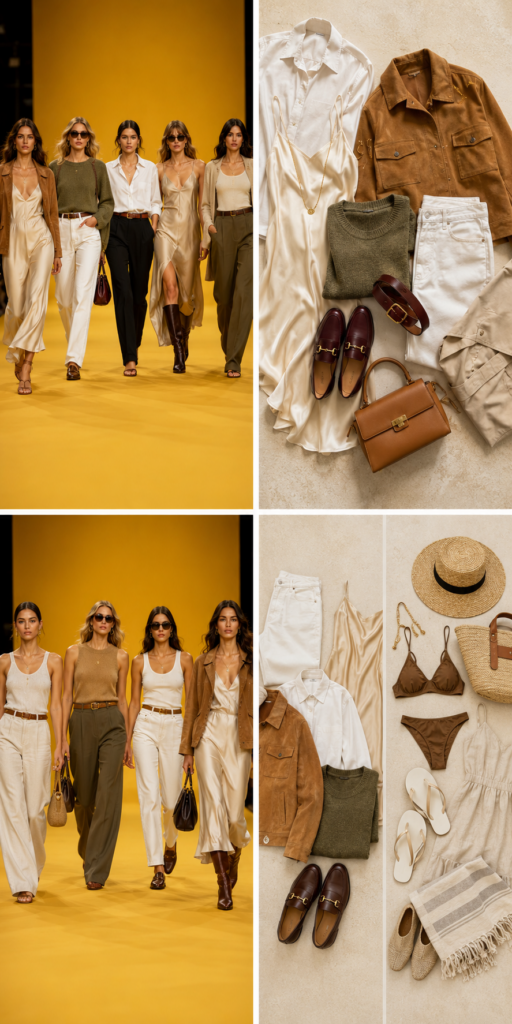
Comparison: Keep Wearing vs. Pack Away
| Keep Out for Early Fall | Pack Away Until Next Summer | |
|---|---|---|
| Fabrics | Cotton, silk, fine linen, denim | Heavy linen, terry, swim fabrics |
| Pieces | Slip dresses, shirts, white denim, fine knits | Swimwear, beach cover-ups, sundresses |
| Footwear | Loafers, mules, ankle boots | Flip-flops, espadrilles, slides |
| Logic | Layerable and versatile | Single-season, hot-weather only |
| In mild climates | Keep most pieces accessible | Store very little |
Common Mistakes When Transitioning to Fall
The most frequent transition mistake is switching the whole wardrobe at once, reaching for heavy knits and boots while afternoons are still warm. The better approach is to lead with lightweight layers and add structure only as the temperature genuinely drops.
A second common error is changing the palette too abruptly; introducing one deeper tone against familiar summer neutrals looks more natural than a fully autumnal outfit overnight. Finally, many people store useful pieces too early, packing away slip dresses and cotton shirts that layer beautifully and could carry the wardrobe through the entire transitional period.
Frequently Asked Questions
When should I start transitioning my wardrobe to fall?
Begin transitioning when evenings start to cool, even while afternoons stay warm, rather than on a fixed date. The earliest signal is temperature variability across the day, which is the moment layering becomes useful. Start by adding a removable third layer and changing your footwear, then adjust fabrics and palette gradually as cooler weather settles in over the following weeks.
Can I still wear summer dresses in early fall?
Yes, most summer dresses transition easily with a layer and a footwear change. Add a fine knit over or under a slip dress, pair a shirt dress with a suede jacket, and swap sandals for ankle boots. Dresses in deeper or neutral tones move into autumn most naturally, while very lightweight beach styles are better saved for next summer.
How do I transition my wardrobe on a budget?
Transition on a budget by re-layering what you already own rather than buying new pieces. Most summer staples work with one added layer, and a single versatile piece like a trench or suede jacket unlocks many outfits. Changing footwear before fabrics is the lowest-cost way to shift a look, since one pair of loafers or boots refreshes several existing outfits.
What is the most important step when transitioning to fall?
The most important step is leading with fabric weight rather than the calendar, dressing for the temperature outside instead of the date. This single principle prevents overdressing on warm afternoons and underdressing on cool evenings. Pair it with one removable layer, and almost any summer outfit adapts to early fall comfortably without the need for a complete seasonal change.
Should I pack away all my summer clothes in fall?
No, only true hot-weather items need storing, such as swimwear, beach cover-ups, and heavy linen sundresses. Breathable, layerable pieces like cotton shirts, slip dresses, white denim, and fine knits remain useful throughout the transition. In milder climates, very little needs packing away at all, since most summer foundations layer comfortably into cooler weather.
Final Thoughts
Transitioning a wardrobe for early fall is a method, not a purchase. Lead with fabric weight, shift the palette one shade at a time, change footwear before fabrics, and add a single removable layer, and almost any summer outfit adapts to the new season. Re-layer the pieces you already own before storing them, and reserve heavy fabrics for the colder weeks ahead. Once the approach becomes second nature, the same logic carries you through every seasonal change. For the wider context behind these shifts, the direction the new season is taking offers a useful overview, while a small, coordinated set of transitional pieces makes the whole process even simpler.

About the Author
Barbara Leber
Fashion Designer | Founder of Lifestyle Barbara Leber
With more than 20 years of experience in fashion design, I share practical styling advice that goes beyond trends. My goal is to help women build elegant, wearable wardrobes and make confident style choices through timeless, refined fashion.
Areas of Expertise
Fashion Design · Capsule Wardrobes · Color Coordination · Seasonal Styling · Luxury Fashion · Editorial Styling