How to Wear the Modern Vintage Trend: 12 Elegant Outfit Ideas
Modern vintage outfits for women combine pieces with different historical references and contemporary essentials, rather than recreating one decade. Start with a distinctive jacket, a flowing midi skirt, or an inherited necklace, then balance it with clean denim, simple shoes, and relaxed tailoring. The most convincing modern vintage style comes from contrast: masculine cotton against feminine silk, textured tweed beside smooth leather, an old handbag with an otherwise current outfit. These twelve elegant combinations show you how to mix eras thoughtfully, adjust proportions, layer jewelry, and use more of your existing wardrobe without looking theatrical or buying everything from scratch.
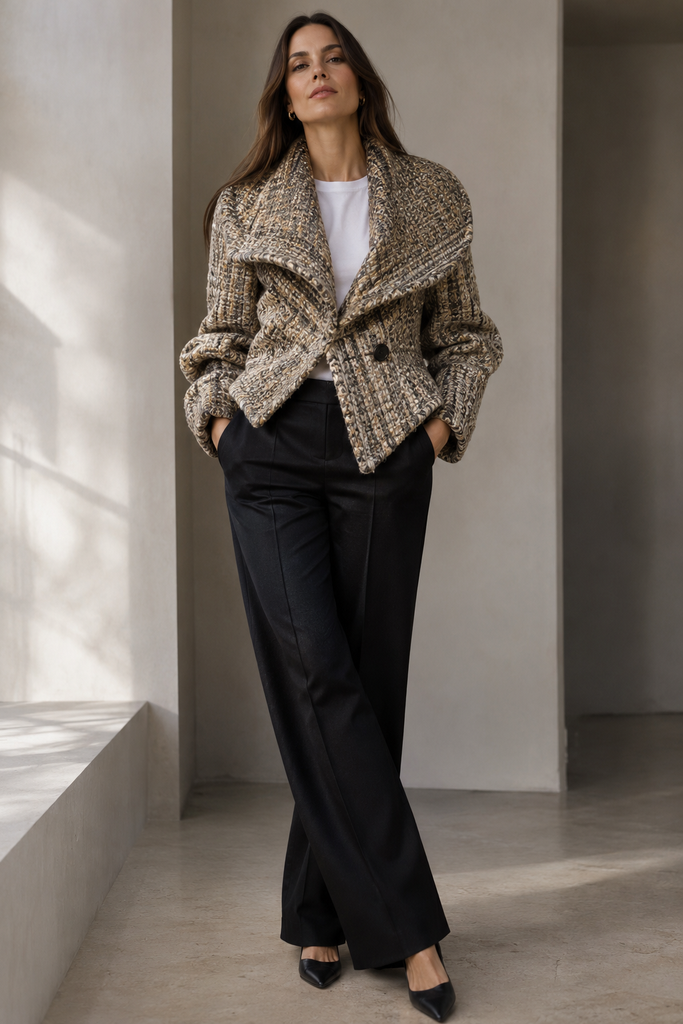
What Makes Modern Vintage Style Look Modern?
The difference is in the combination, not the label. A textured jacket can feel formal with its matching skirt, nostalgic with a pussy-bow blouse, or relaxed with straight jeans and pared-back shoes. You do not need to change the jacket. Change the conversation around it.
In “Why Everything New Looks a Little Vintage Right Now,” Harper’s Bazaar describes Chanel creative director Matthieu Blazy taking inspiration from young people who mix references from the 1930s, 1950s, and 1970s without committing to one period. The article highlights old-school jackets with new shoes, skirt suits with layered necklaces, and masculine shirting beside more feminine elements.harpersbazaar
That distinction matters: a new garment can contribute to a vintage-inspired outfit, and a genuinely old garment can look entirely contemporary. The styling is doing much of the work. The magazine’s interpretation is about depth, texture, and individuality—not an instruction to dress as though you belong in an archival photograph.
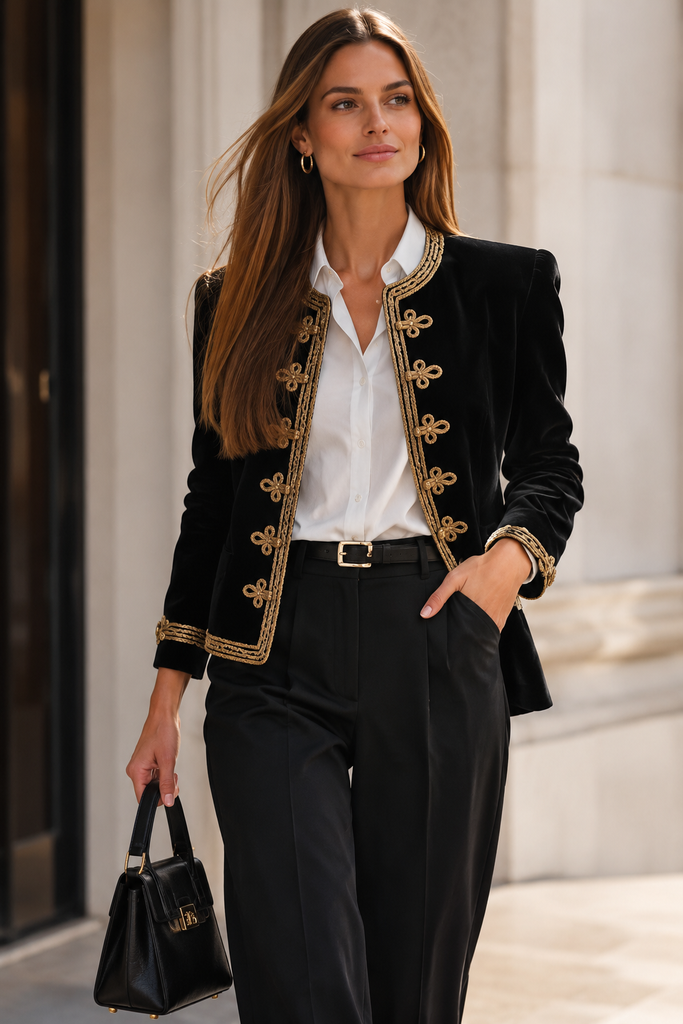
Start With One Piece That Has Character
Choose the item you would notice first on a rail: an unusually beautiful weave, a sculptural clasp, a softly draped skirt, or an interesting collar. Build around that feature rather than collecting unrelated nostalgic details.
My styling preference is to give one piece the leading role and let the others create useful tension. If everything is equally decorative, your eye has nowhere to settle. A plain cotton shirt or a simple pair of trousers is not a compromise; it makes the distinctive piece easier to appreciate.
Connect Different Eras Through Color or Shape
You can mix a romantic blouse, tailored trousers, and a compact old handbag without identifying the decade of each piece. Repeat something visible instead: warm ivory, a curved silhouette, dark brown leather, or softly burnished metal.
This gives the outfit coherence without forcing the garments into a matching set. For example, the rounded clasp on a bag can echo curved earrings, while an ivory blouse picks up the lighter threads in a checked jacket. The references differ, but the visual language feels related.
12 Elegant Modern Vintage Outfit Ideas
Start with the combination closest to something you already wear. You will learn more from adjusting familiar clothes than from buying an entire unfamiliar look.
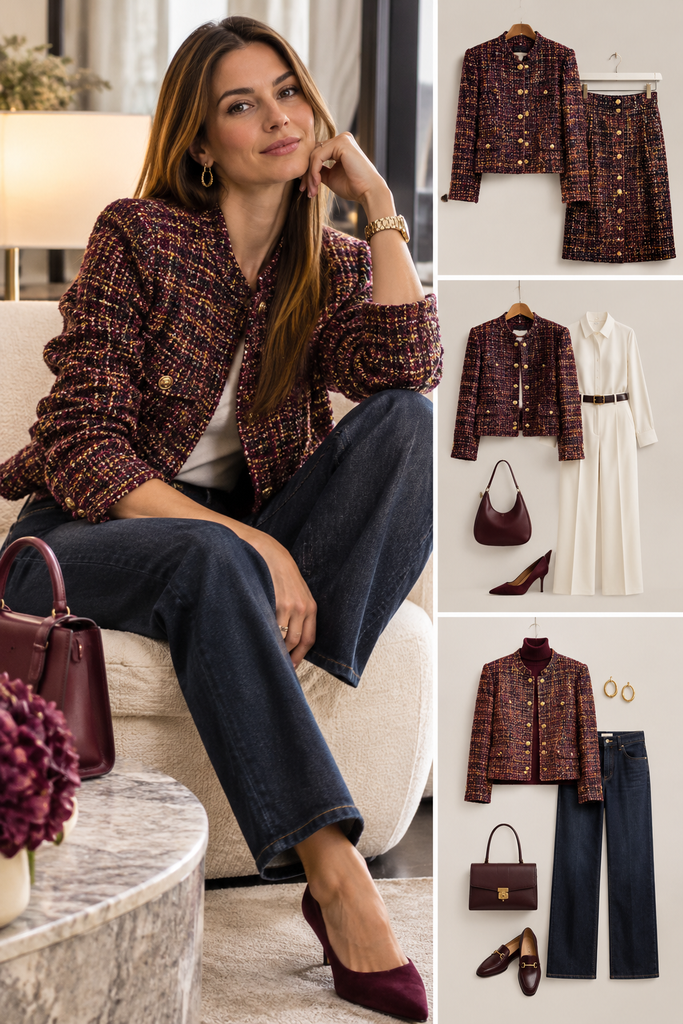
1. A Vintage Tweed Jacket, Straight Jeans, and Minimal Sneakers
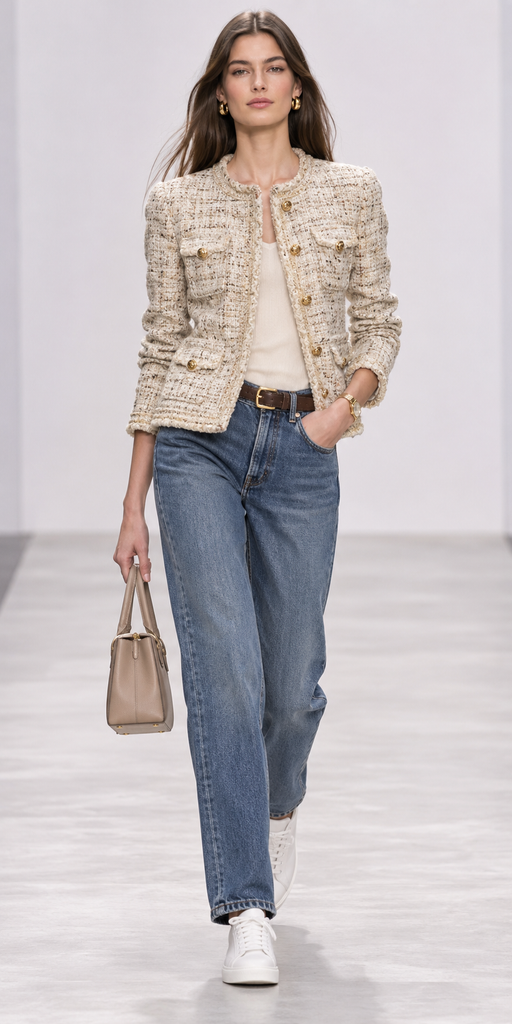
Wear a textured jacket over an ivory tank with straight, dark jeans and low-profile sneakers. A vintage Chanel jacket works if you own one; an unbranded version can serve the same styling purpose. Keep the denim quiet so the jacket’s weave and buttons remain the focal point.
2. A Masculine White Shirt and a Below-the-Knee Skirt
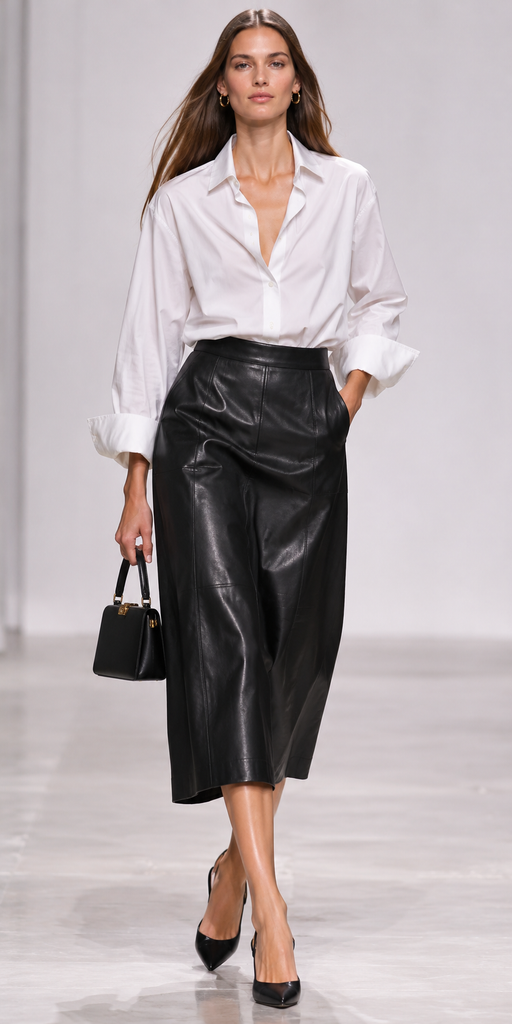
Tuck a generous cotton shirt into a black leather midi skirt. Open the neckline and turn back the cuffs to release some formality. Slim slingbacks and a small older handbag balance the shirt’s volume; a sleek low-heeled shoe keeps the outfit useful beyond special occasions.
3. A Fluid Satin Skirt, Fine Knit, and Structured Bag
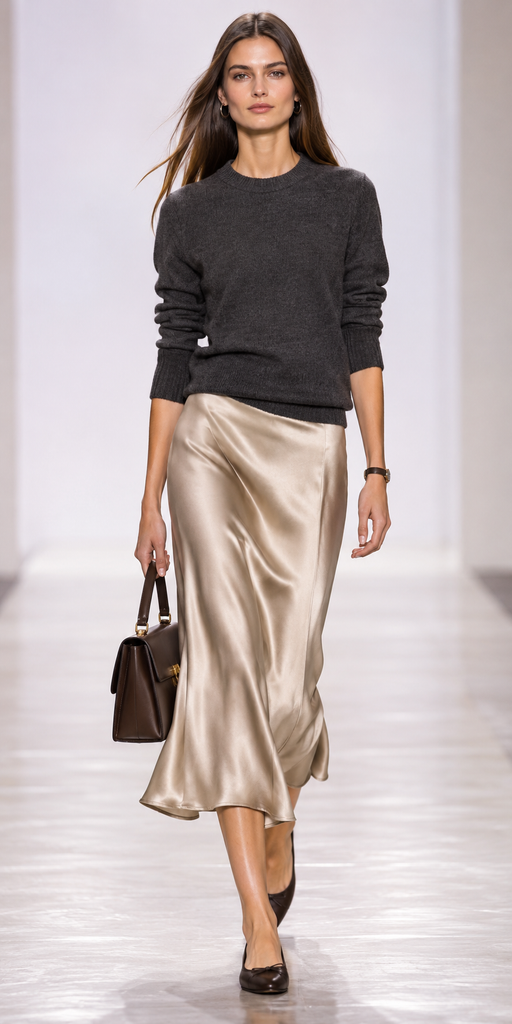
Pair a champagne satin midi with a charcoal crewneck and simple flats. The knit softens the skirt’s evening associations, while a structured vintage bag gives the fluid silhouette definition. Choose a sweater hem that meets the waistband, or tuck only enough to reveal where the skirt begins.
4. A Full Skirt, Ribbed Tank, and Clean Leather Belt
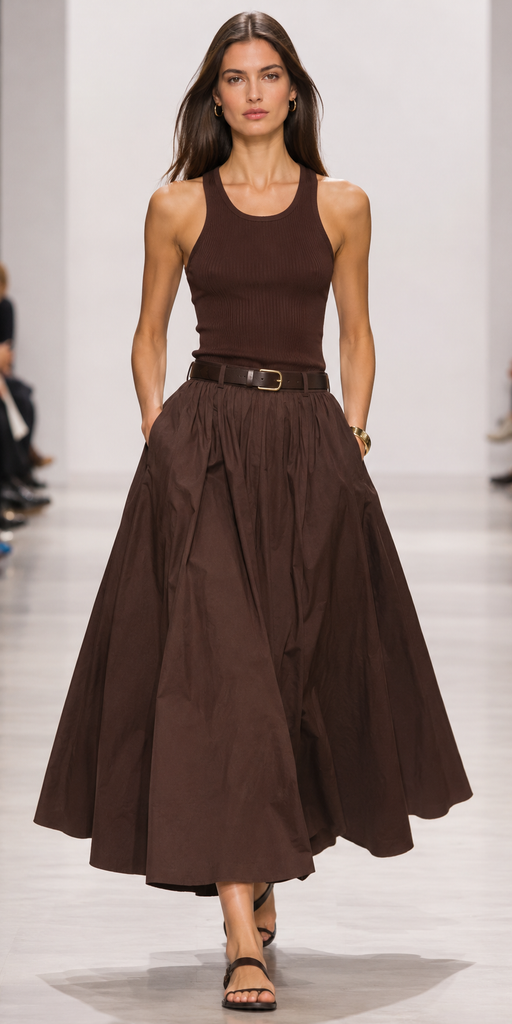
Combine a softly full cotton skirt with a fitted tank and flat sandals. The close-fitting top makes the skirt’s volume look deliberate. Keep the belt simple and skip a matching retro shoe; the contrast between an expressive silhouette and an ordinary modern basic is the point.
5. A Suede Blazer, Flared Jeans, and a Simple Top
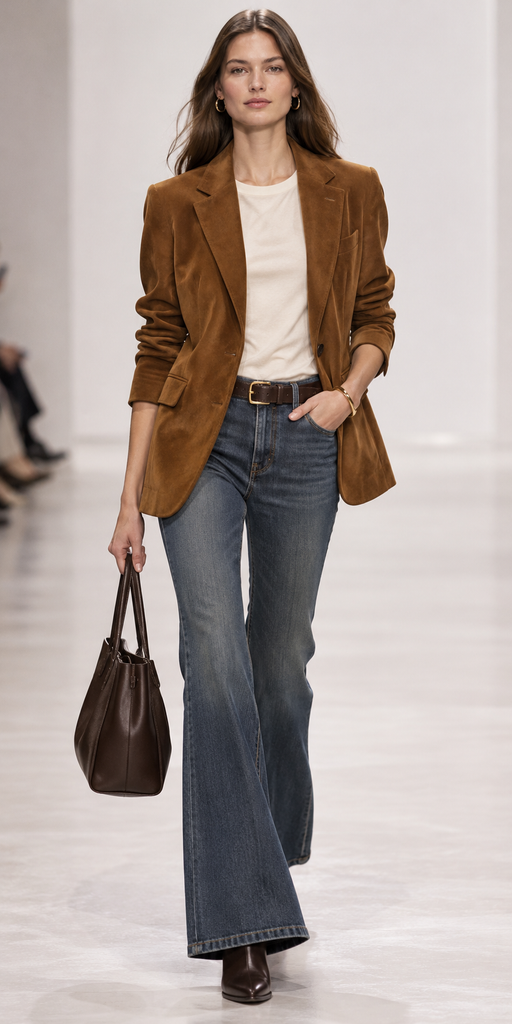
Use a caramel suede blazer over an ivory tee with gently flared denim. Keep the flare restrained and the shoulder comfortable. A dark leather bag grounds the warm texture. Avoid adding fringe, a wide-brimmed hat, and a large buckle together unless you deliberately want a stronger period reference.
6. A Lace Blouse and Relaxed Tailored Trousers
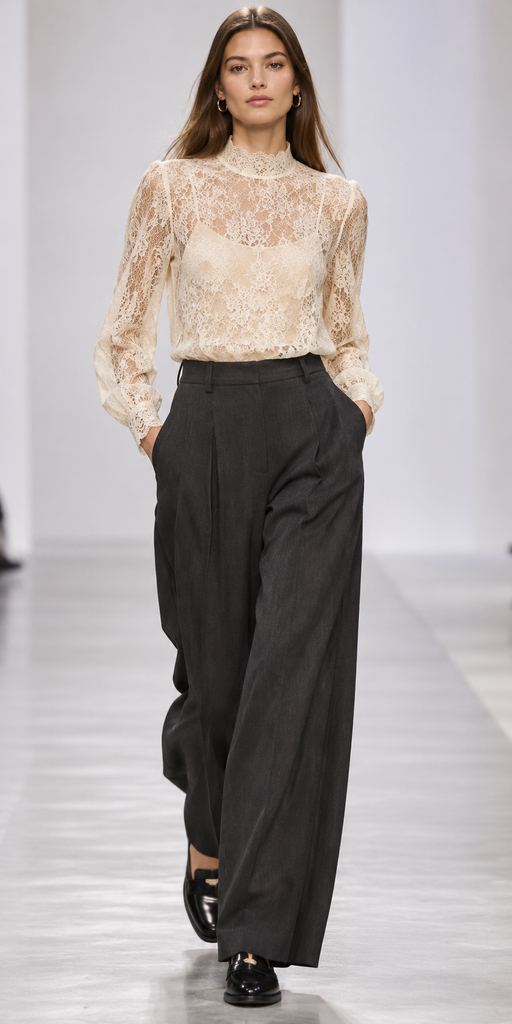
Wear an ivory lace blouse with generous charcoal trousers and plain loafers. Let the trousers fall cleanly rather than bunch at the shoe. The contrast is enough: intricate fabric above, an uninterrupted line below. Choose an opaque underpinning that gives you the coverage you want.
7. A Printed Scarf, White Tee, and Dark Denim
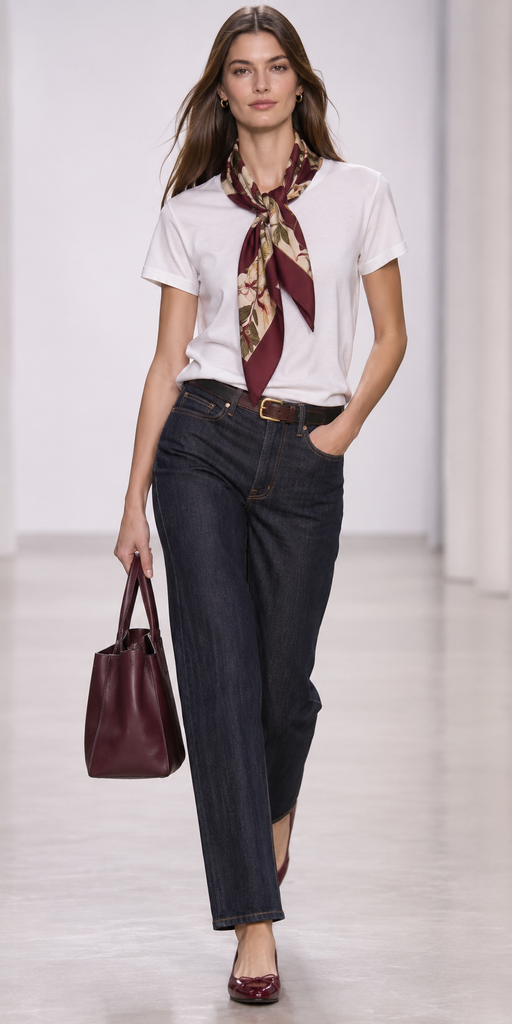
Tie an older silk scarf loosely at the neck over a white tee, then add straight indigo jeans and simple flats. Pick one scarf color for your bag or shoes. Keep earrings small so the neck area feels considered rather than crowded with competing details.
8. A Vintage Waistcoat and Wide-Leg Trousers
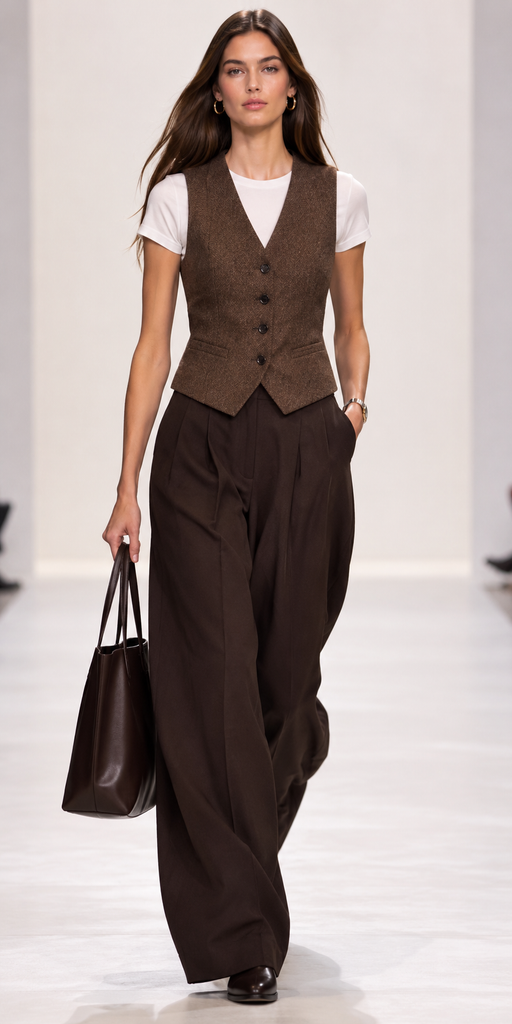
Wear a softly shaped waistcoat over a fine cotton tee with wide-leg trousers. Leave enough room to sit comfortably without pulling at the buttons. A modern tote and plain shoes keep it relaxed; skip the pocket watch and matching tailoring if the result feels too literal.
9. A Floral Midi Dress and a Boxy Leather Jacket
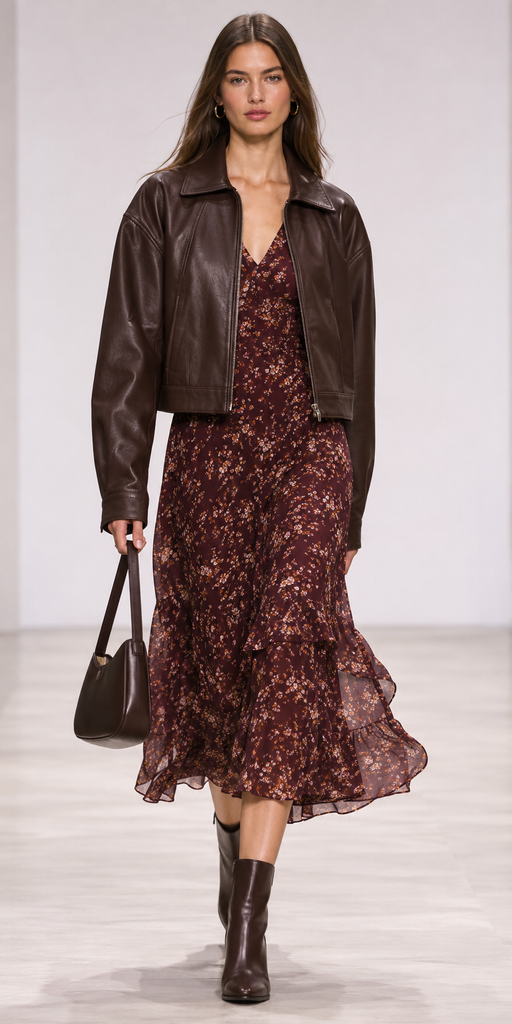
Balance a small-scale floral dress with a clean leather jacket and uncomplicated ankle boots. A jacket ending near the waist preserves the dress’s shape. If the dress has ruffles or a busy neckline, leave jewelry restrained and choose a bag without extra decorative hardware.
10. A Black Knit, Tailored Trousers, and Layered Necklaces
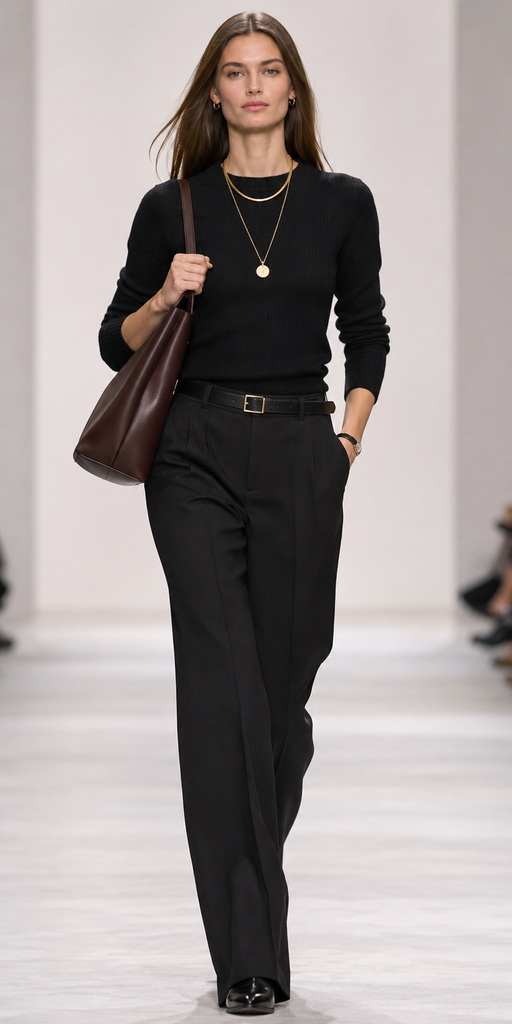
Build a dark, simple base with a fine knit and straight trousers. Add two necklaces at clearly different lengths, perhaps an older pendant and a smooth contemporary chain. Let them supply the character. Small earrings and a quiet belt prevent the accessories from competing around your face.
11. A Modern Shirt Dress and an Older Top-Handle Bag
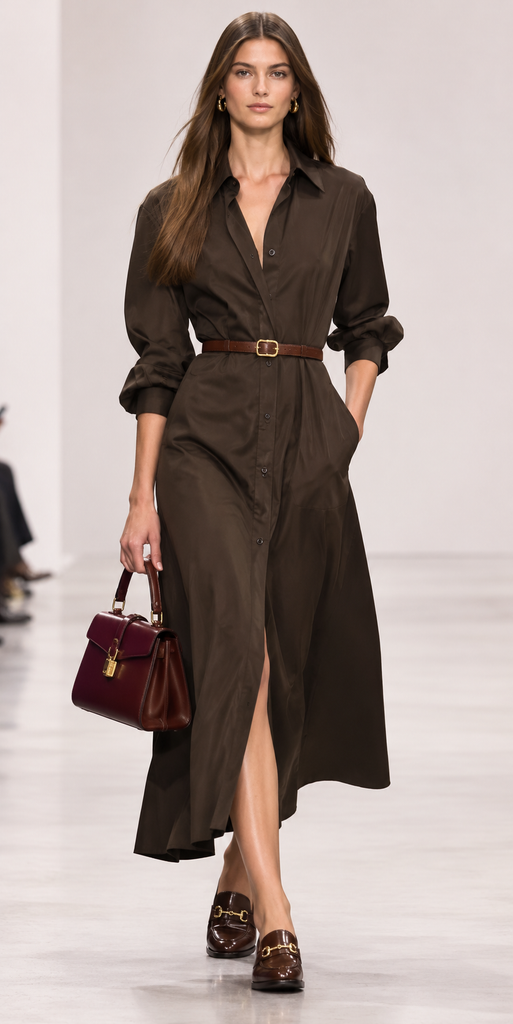
Choose a clean-lined shirt dress, flat sandals or loafers, and a compact vintage top-handle bag. The bag brings age and texture without taking over the silhouette. Repeat its leather color once, perhaps in a narrow belt, rather than trying to assemble a fully matching accessory set.
12. An Evening Jacket, Plain Tee, and Dark Jeans
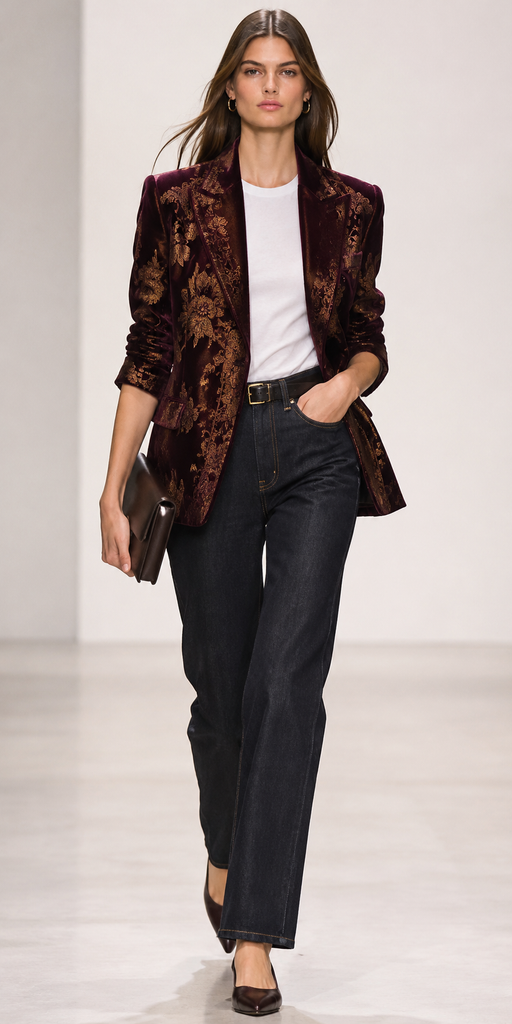
Wear a brocade or velvet evening jacket over a plain tee with dark, straight jeans. Simple pointed flats or low heels finish it. The denim makes the jacket less ceremonial; avoid adding equally ornate shoes, a glittering clutch, and dramatic earrings to the same outfit.
Make the Outfit Work With Your Proportions
The era references may be playful, but the fit still needs attention. Before adding another accessory, look at the outline of your outfit from the front and the side. Often the most effective adjustment is a different hem, sleeve, or waistband—not another purchase.
Balance Volume Instead of Following a Body-Type Formula
A full skirt does not require a tight top, but it benefits from a visible decision about shape. You might choose a fitted tank, a cropped boxy shirt, or a longer blouse with a defined tuck. Each creates a different balance.
The same applies to wide trousers. If your jacket is also generous, show a little structure through an open front, a visible waistband, or a narrower layer underneath. You are creating readable lines, not trying to make your body conform to a category.
Check Where the Hem Meets the Shoe
Below-the-knee skirts can look very different with a low vamp, an ankle strap, or a boot shaft. Try the complete combination before deciding the skirt itself is wrong. A shoe exposing more of the instep creates less visual interruption; a boot can create a continuous line if the skirt overlaps its shaft.
Choose the effect you prefer rather than treating exposed ankles as a requirement. For everyday outfits, being able to walk comfortably and sit easily matters more than preserving a precise reference photograph.
Let Tailoring Improve Comfort, Not Just Appearance
Check shoulder placement, the way a waistband feels while seated, and the movement available across your back. A beautiful jacket that restricts your arms is unlikely to become an everyday favorite.
Ask a tailor about feasibility before buying something that needs major structural changes. Small adjustments and complete reconstruction are different projects. A bargain becomes less useful when the alterations exceed your budget or remove the detail you loved in the first place.
For more ways to build around an existing jacket, read 12 Black Blazer Outfit Ideas.
Find Your Starting Combination
Choose the piece you already own. Open its panel for an outfit formula and one adjustment to try before buying anything new.
Build around something you own
You can open more than one option to compare combinations.
I have a textured or decorative jacket
Try outfit 1 or 12: add a plain tee, straight jeans, and simple shoes. Check whether the top and waistband are visible beneath the jacket before adding jewelry.
I have a midi skirt
Try outfit 2, 3, or 4: pair a slim skirt with a relaxed shirt, a fluid skirt with a fine knit, or a full skirt with a ribbed tank. Adjust the top’s hem first.
I have a scarf, necklace, or older handbag
Try outfit 7, 10, or 11. Start with a simple base, then repeat one color or metal finish from the accessory. You do not need another vintage purchase.
I have a romantic blouse or floral dress
Try outfit 6 or 9. Add tailored trousers to the blouse or a clean leather jacket to the dress. Keep the shoes simpler than the most decorative garment.
Mix Jewelry and Accessories Without Overloading the Look
Accessories can connect pieces that would otherwise feel unrelated. They can also overwhelm a good outfit surprisingly quickly. Begin with the garment you want to emphasize, then decide where an accessory adds something the clothes are missing.
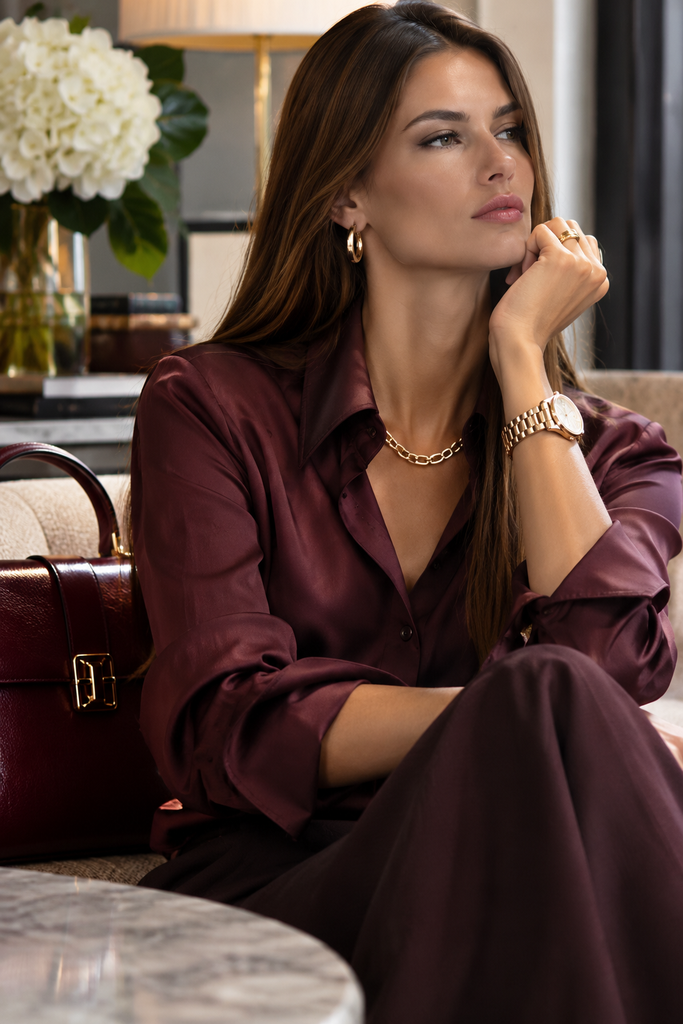
Layer Jewelry With Breathing Room
Vary necklace length enough that each piece remains visible. A short smooth chain and a longer pendant tend to look more intentional than several necklaces sitting on the same line. Try the arrangement with the actual neckline, not over a different top.
Mixed metals can look coherent when a repeated detail connects them: rounded links, a similar scale, or a piece combining both finishes. There is no need to distribute gold and silver in exact proportions. The practical question is whether the combination looks purposeful to you.
Use Old and New Accessories for Different Jobs
Let an older bag provide texture while newer shoes provide the comfort and condition you need. Or reverse the emphasis: a simple contemporary bag can calm an ornate belt or a striking pair of earrings.
Avoid judging the outfit through age alone. A necklace does not become visually successful simply because it is old. Scale, color, placement, and how it sits against your clothes matter more than its story when you are assessing the finished look.
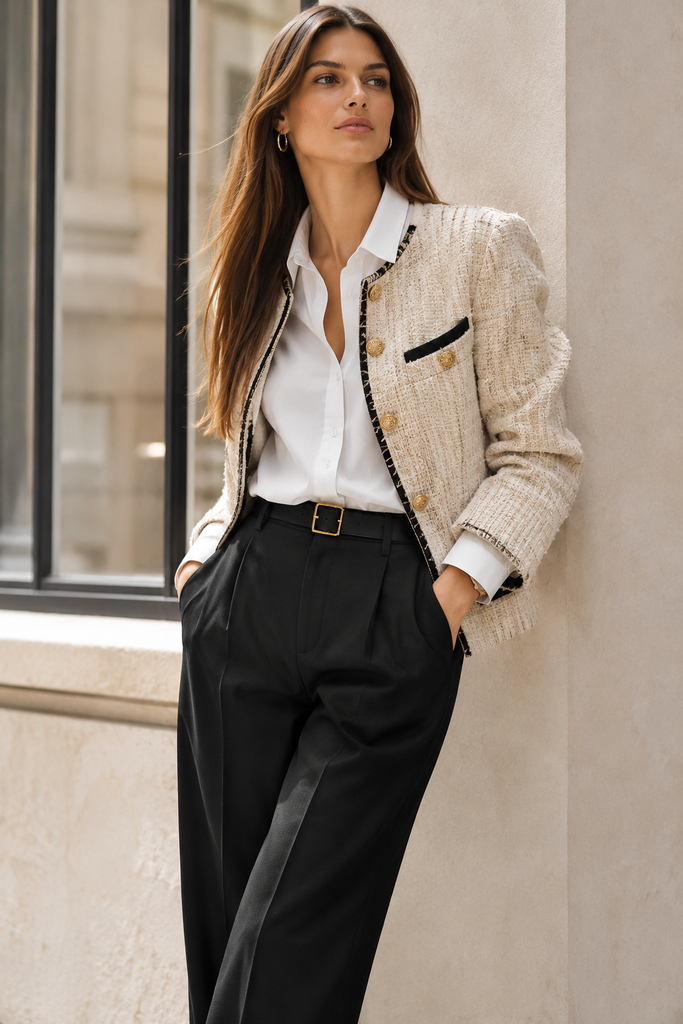
Give Lace a Simpler Surrounding Wardrobe
If lace feels too dressy, change the surrounding pieces before rejecting it. Cotton, denim, plain leather, and relaxed tailoring give delicate fabric a useful counterweight. Choose just one romantic focal point initially, especially if your usual style is minimal.
For additional combinations, read How to Wear Lace in the Daytime: 7 Elegant Fall Outfit Ideas
Build Character Without Replacing Your Wardrobe
The appeal of modern vintage dressing is not that it supplies another shopping list. It gives you more ways to use pieces whose original combinations no longer feel right. A jacket separated from its matching skirt may suddenly become much easier to wear.
Shop Your Closet Before Shopping Secondhand
Pull out five pieces with distinctive texture, shape, or detail. Include accessories, not just clothes. Then pair each with your simplest current essentials: a tee, jeans, a shirt, tailored trousers, or a plain knit.
Photograph the combinations you genuinely like. Look for the missing function rather than a vaguely missing aesthetic. You might need comfortable dark flats, not another statement blouse. That distinction keeps the wardrobe wearable and gives any eventual purchase a specific role.
If your wardrobe is difficult to assess, start with How to Organize Your Closet and Actually Enjoy It.
Buy for Compatibility, Not Just Novelty
Before buying a secondhand garment, name three pieces you already own that you would wear with it. Ask for garment measurements when shopping online, compare them with a similar item that fits, and read the seller’s return terms.
Inspect lining, closures, seams, and areas of visible wear. For delicate fabrics or uncertain cleaning requirements, seek appropriate professional advice rather than assuming a routine wash will solve every problem. Older does not automatically mean better condition, better construction, or easier care.
Keep the Resale Statistic in Perspective
Harper’s Bazaar cites ThredUp’s resale research as finding that 62 percent of Gen Z shoppers bought secondhand in the previous year. That supports the article’s discussion of secondhand familiarity; it does not establish that all those purchases were vintage or that every buyer was deliberately mixing eras.
The useful takeaway is not an obligation to shop like another generation. It is permission to treat existing clothes as material for new combinations. Keep what serves you, repair what is worth repairing, and buy selectively when a real wardrobe gap remains.
Frequently Asked Questions
These answers address the practical differences between wearing vintage pieces, mixing eras, and building outfits that still feel like you.
How do you wear vintage without looking like you are in costume?
Wear one strongly vintage-inspired piece with simpler clothes you already use. A decorative jacket feels less theatrical with straight jeans and a plain tee than with a matching skirt, period hat, and elaborate shoes. Keep the fit comfortable and the accessories selective. You can add another reference once the basic combination feels natural. The aim is not to erase the older piece’s character; it is to give that character a contemporary setting. Check the complete outfit, including hair, bag, and footwear, because several individually subtle nostalgic details can create a much stronger historical impression when you wear them together outside.
Can you mix clothes inspired by different decades?
Yes, you can mix clothes inspired by different decades without reconstructing any single period. Give the pieces a visual connection through color, shape, texture, or scale. For example, a romantic blouse and clean tailored trousers can share an ivory and charcoal palette, while a structured older handbag adds contrast. Begin with two expressive elements rather than several competing ones. If the outfit feels disconnected, simplify the shoes or remove an accessory before replacing the clothes. You do not need to identify every garment’s historical reference accurately to build a coherent combination; you need to understand how the pieces work together.
Do modern vintage outfits need authentic vintage clothing?
No, modern vintage outfits do not require authentic vintage clothing. You can create the effect through silhouette, fabric, accessories, and the contrast between pieces. A newly made full skirt, an existing cotton tank, and an inherited bag can communicate the idea without an entirely secondhand wardrobe. Keep the distinction clear when shopping: a vintage-inspired design is not evidence that a garment is genuinely old. If authenticity or collectibility matters to your purchase, seek reliable documentation and specialist guidance. If your goal is everyday style, prioritize fit, condition, comfort, and compatibility with the clothes you already own and enjoy wearing regularly.
What shoes work with modern vintage outfits?
Simple shoes are a useful starting point for modern vintage outfits because they leave room for expressive clothing. Try low-profile sneakers with a textured jacket, plain loafers with tailored trousers, or understated flats with a fluid skirt. Evaluate the shoe with the actual hemline: an ankle strap, boot shaft, or high vamp changes where the eye pauses. Choose the relationship you prefer rather than following one universal rule. Condition and comfort matter, too. You do not need period footwear to complete the idea, and you should not keep an uncomfortable pair simply because it matches an outfit’s historical reference exactly.
How can you try modern vintage style on a small budget?
Start with your existing wardrobe and use accessories or new combinations before buying more clothes. Separate matching sets, pair a dressy jacket with denim, or add an older scarf to a simple tee. When shopping secondhand, compare measurements, inspect condition, and include cleaning or alteration costs in your budget. A low purchase price is less helpful if the piece needs work you cannot reasonably afford. Choose an item that combines with several things you already wear. One versatile addition can support multiple outfits, while several unusual bargains may remain unworn because they do not connect with your everyday wardrobe needs.
Start With One Unexpected Pairing
Choose one piece you have been saving for the right outfit. Wear it with your most reliable jeans, a simple shirt, or a familiar knit. Adjust the proportions, simplify the shoes, and keep only the accessories that add something.
Modern vintage style becomes personal through those decisions. You are not dressing for a decade. You are finding a better way to wear what deserves a place in your wardrobe.